
Turn crossing time into the best part of the trip.
Your passengers are already looking at the coastline with a phone in their hand. A sailing is a fixed route travelled hundreds of times a season — which makes it the easiest journey in the world to narrate well.
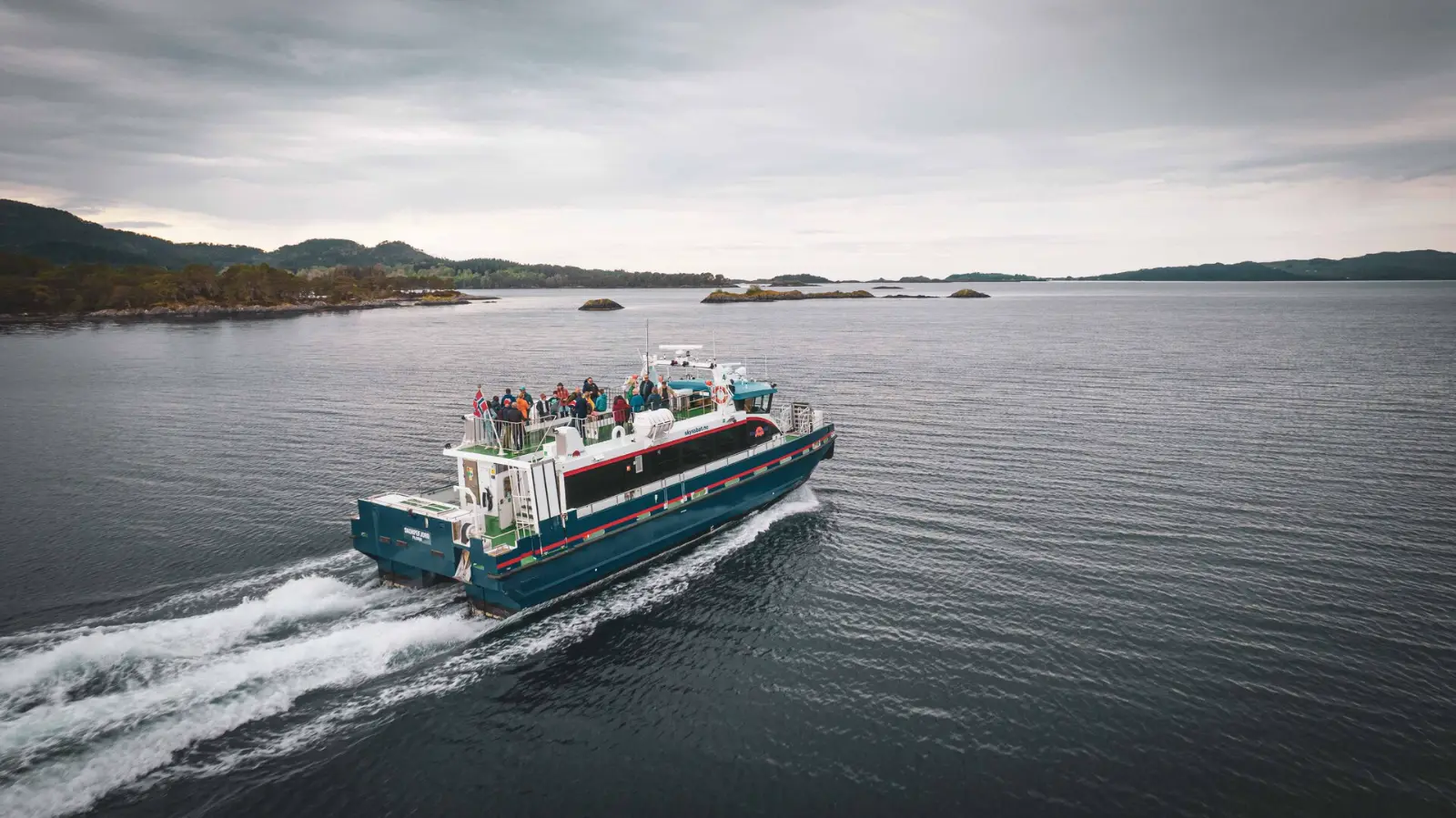
Every crossing follows the same line past the same islands, lighthouses and headlands. Build the stories once, and they play for every passenger on every sailing after that — with no staffing, no handsets to collect, and no dependence on a mobile signal you don't have out at sea.
Three ways operators use it on board.
Narrate the coastline as you pass it
Points of interest trigger by position, so the story about the lighthouse arrives while the lighthouse is still in view — not ten minutes after.
Two experiences on one route
Direction-aware points let the outbound leg tell the history of the coast and the return leg tell the story of the ports and people. Same crossing, different trip.
Land them ready for shore
Trigger an arrival briefing before docking: what's worth seeing in the next three hours, how far it is, when to be back at the ramp.
Built for the conditions on a vessel.
Works with no signal
Guides download over the terminal's wifi and run entirely offline. Mid-fjord and mid-channel make no difference.
QR onboarding
A code on the seat back, the ramp or the ticket takes passengers straight into the guide. No search, no instructions.
15 languages
Mixed passenger lists are the norm on a crossing. Every point plays in the traveller's own language.
Your route, your brand
The route carries your name and voice, inside an app your passengers already trust.
From one sailing to your whole timetable.
Start with one crossing
Pick your most scenic or most travelled route. Six to ten points is enough for a first guide.
Add the stories
Drop each point on the map, set how close the vessel needs to be, and add narration — your own recordings or generated from your text.
Put the code on board
Print the QR for seat backs and gangways. Watch which points passengers actually listen to, then build the next route.
See it running on your own crossing.
Send us a route and we'll show you what the first three points would sound like on board.